Staying Connected at Protests and Rallies: A Complete Guide
Attending a protest or rally requires a deliberate communication strategy: you need to exchange messages, share media, and coordinate with others while protecting your digital footprint. The core challenge is that every time you connect, your phone can leak location data, expose your contacts, or be seized and searched. This guide explains how to stay connected at protests and rallies, covering pre-event device hardening, encrypted messaging, location privacy, international travel with an eSIM, and what to do if your device is confiscated.
Most people think about what to bring to a protest—water, signs, comfortable shoes—but your phone is the single most revealing item in your pocket. When law enforcement accesses one person's phone at a protest, they can map the entire network: contacts, Signal threads, and location history. That one seizure can expose everyone you organize with. This guide gives you a practical framework to prevent that.
Key Takeaways
- Before a protest, power off your phone if possible, set a strong passcode, disable biometric unlock, turn on Signal disappearing messages, and hide notification previews.
- Airplane mode alone does not disable GPS tracking; you must disable location services system-wide and revoke permissions from individual apps to stop location leaks.
- Encrypted messaging apps like Signal and WhatsApp keep your messages unreadable to interceptors and offer expiring messages to reduce traces after the event.
- Leaving location-capable devices—including smartwatches—at home is the most effective way to avoid location tracking.
- Using any connected phone at a protest, even with Signal, can expose your location through the network, so you must decide which tradeoff matters more: connection or concealment.
What Should You Do to Your Phone Before a Protest?
If you are at elevated risk of arrest, power off your phone completely. In most situations, though, you can use a few key settings to significantly reduce what a seized phone can reveal. The activist checklist recommends the following steps before you go: set a strong passcode, disable biometric unlock (face or fingerprint), enable disappearing messages in Signal, and hide notification previews. These actions make it harder for someone who briefly grabs your phone to access your data or see who is contacting you.
Organizers and people more likely to be targeted should go further. Powering off your phone is the only certain way to prevent remote tracking or message interception. If you cannot power off, enabling airplane mode reduces some signals, but it does not disable GPS tracking. So, if your goal is to prevent location tracking, you must disable location services system-wide, not just switch to airplane mode.
A concrete example: imagine you are at a rally and a police officer asks to see your phone. If your phone uses face unlock, they can simply point it at you and gain access. If you have a strong passcode and biometric unlock is off, they cannot open it without your cooperation. That small setting change can mean the difference between a locked device and a full data dump.
How Do You Keep Your Messages Private During a Protest?
Use end-to-end encrypted messaging apps for all protest-related communication. Signal is the most commonly recommended option because it encrypts messages by default and includes a disappearing messages feature. With disappearing messages set to 5–15 minutes, your conversations leave little trace on the device after the protest. This is especially important if your phone is later seized or stolen.
Signal also allows you to hide message previews and sender names in notifications. That way, if someone glances at your lock screen, they won't see who is messaging you or what the message says. WhatsApp is another option; it uses the same encryption technology as Signal and has wider adoption, which can be useful for coordinating with people who don't use Signal. Both apps support group chats, making them practical for organizing.
One nuance: encrypted messaging protects the content of your messages, but it does not hide the fact that you are communicating. The metadata—who you are talking to, when, and from where—can still be visible to network operators or surveillance systems. If you need to minimize even that, you might consider leaving your phone at home or using it only in airplane mode for offline note-taking.
Does Airplane Mode Stop GPS Tracking?
No. Airplane mode disables cellular, Wi-Fi, and Bluetooth radios, but it does not disable GPS, because GPS is a receive-only service that does not require you to transmit. Your phone can still determine its location and store that data locally. That means if your phone is later accessed, someone could reconstruct where you were. To truly stop location tracking, you must turn off location services system-wide or, better yet, leave the phone at home.
This is a common misconception. Many people switch to airplane mode thinking they are invisible, but location data continues to accumulate. The activist checklist specifically warns that airplane mode alone does not disable GPS tracking. So if you are at a protest where being identified as present could put you at risk, take the extra step of disabling location services entirely.
Should You Leave Your Phone at Home?
Leaving your phone at home is the most reliable way to prevent your device from proving you were at a protest. If there is no device with you, there is no location data to capture, no messages to intercept, and nothing to confiscate. This is the recommendation from digital security experts: leave any devices with location-gathering capabilities, including smartwatches, at home.
But that advice comes with a tradeoff. If you leave your phone at home, you cannot communicate with friends, call for help, or document events. The Electronic Frontier Foundation (EFF) notes that people at protests will sometimes have to make tradeoffs. You might have good reasons to send a Signal message—for example, to tell a friend what you are seeing so they can alert others, or to send photos and videos to someone else so that if your phone is confiscated, you still have a way to retrieve the media later.
On the other hand, you might have good reasons to block adversaries from using your phone to prove you were at a protest; that requires turning off connectivity or leaving it at home. The decision depends on your risk profile, the nature of the protest, and whether you have a specific need to communicate.
How Do You Document a Protest Safely?
Capturing photos and videos is a powerful way to get your message out, but it also creates a record that can be used against you or others. If you choose to document, consider sending the media to a trusted contact immediately so that if your phone is seized, you have a copy elsewhere. Use an encrypted app to send the files. Then, delete them from your phone if keeping them poses a risk.
Remember that the act of sending media over a network can expose your location. If you are trying to remain anonymous, you might need to avoid sending anything until you are in a safe location. As the EFF points out, if you go to a protest and use your phone to communicate, even with Signal, the phone's connectivity might expose your location. So documentation and anonymity are often in tension.
A practical workflow: take photos or videos with your phone in airplane mode, then wait until you have left the protest area before sending them. That way, you are not transmitting your location from the event itself. This is not a perfect solution—your phone still records GPS coordinates in the photo metadata unless you strip it—but it reduces the live tracking risk.
What About International Travel and Protests Abroad?
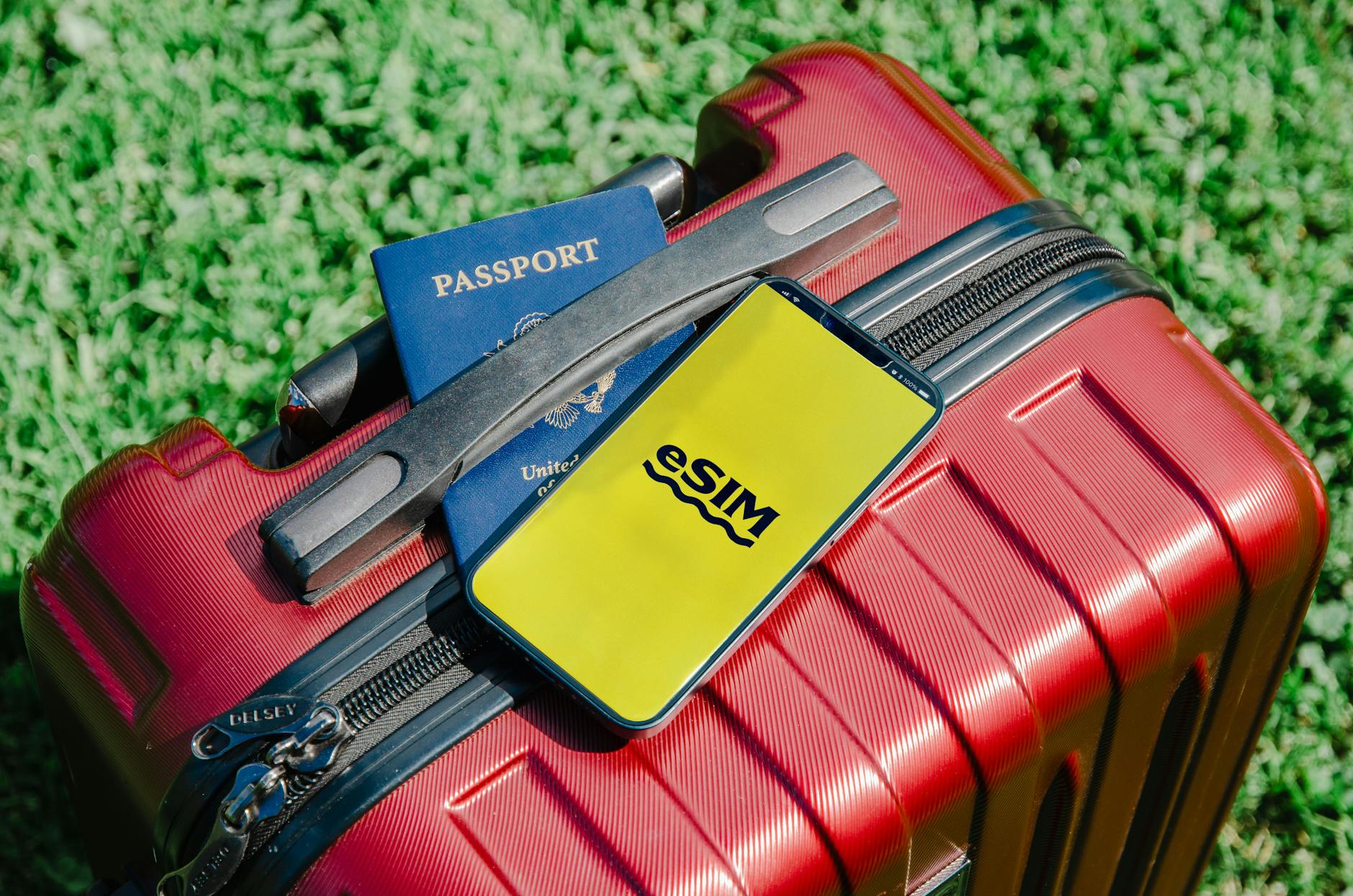
If you are traveling to another country for a protest or rally, your connectivity challenges multiply. You face roaming charges, unfamiliar networks, and the risk that your home carrier's data passes through systems you don't control. Using an eSIM can help you avoid roaming costs and get online quickly. Saily, for example, offers one eSIM for multiple destinations and automatic activation, so you can land and connect without hunting for a local SIM card.
When you are protesting abroad, the same digital security principles apply, but with an added layer: your data may be subject to different laws and surveillance practices. You should still use encrypted messaging, disable location services, and consider leaving your primary phone at home. For a deeper dive into the unique challenges of international protest travel, see our guide on How to Stay Connected at a Protest Abroad: A Complete Guide for International Travelers.
Choosing the right eSIM for protest travel matters. You want a plan that is flexible, secure, and easy to set up before you leave. Our article on What Is the Best eSIM for Protest Travel? A Guide for Activists and Travelers breaks down the features to look for. And if you are specifically trying to keep costs down, read How to Avoid Roaming Costs When Traveling for Political Rallies.
How Does an eSIM Help You Stay Connected at Protests and Rallies?
An eSIM is a digital SIM that lets you activate a cellular plan without a physical card. For travelers, that means you can buy a data plan before you leave home and have it activate automatically when you arrive. Saily's eSIM service includes features like 24/7 live chat support, security benefits, flexible data plans, and data usage notifications. Those features matter when you are in a foreign country and need reliable connectivity for coordination or emergencies.
But you must still apply the same security precautions. An eSIM does not automatically encrypt your traffic or hide your location. You still need Signal or WhatsApp for messaging, and you still need to disable location services if you want to avoid tracking. Think of the eSIM as your connectivity layer; the security layer sits on top.
For a step-by-step setup, see How to Set Up an eSIM Before Attending a Political Rally Abroad. And for a broader look at data plan options, our The Complete Guide to Mobile Data Plans for Social Movement Travel is a useful resource.
What Should You Do If Your Phone Is Confiscated?
If your phone is confiscated, the first thing to understand is that anything on it—messages, photos, location history—could be accessed. That is why pre-event preparation matters. If you followed the steps above—strong passcode, no biometrics, disappearing messages, hidden previews—you have already limited the damage. You should also consider what accounts are logged in. If you can, remotely wipe the device or log out of accounts from another device.
In some cases, you may be able to retrieve your phone later, but the data may already be copied. The key is to assume that anything on the phone is no longer private. This is why experts recommend not bringing your primary phone to a protest if you are at high risk. A burner phone with minimal data is a better option if you must have connectivity.
Frequently Asked Questions
Can I use my regular phone at a protest safely?
You can reduce risk by following the pre-protest checklist: strong passcode, biometrics off, disappearing messages on, notification previews hidden, and location services disabled. However, using any connected phone at a protest can expose your location through the network. The safest option is to leave it at home or power it off.
Is airplane mode enough to prevent tracking?
No. Airplane mode does not disable GPS, which can still record your location. To prevent location tracking, you must disable location services system-wide or leave the device at home.
What is the best messaging app for protests?
Signal is widely recommended because it encrypts messages by default and offers disappearing messages. WhatsApp uses the same encryption and has broader adoption, making it useful for group coordination. Both are good choices.
How can I stay connected while traveling to a protest abroad?
Using an eSIM can help you avoid roaming costs and get online quickly. Saily offers one eSIM for multiple destinations, automatic activation, and 24/7 support. Combine that with encrypted messaging and location controls for a safer experience.
The Tradeoff Framework: Connection vs. Concealment
Every decision about staying connected at a protest comes down to a tradeoff between connection and concealment. Connection means you can communicate, coordinate, and call for help. Concealment means you leave no digital trace that could identify you or others. You cannot maximize both at the same time.
Use this framework to decide your approach:
| Risk Level | Recommended Approach |
|---|---|
| Low risk (large, permitted rally) | Keep phone on but use encrypted apps, disable location services, hide notifications. |
| Medium risk (smaller action, some police presence) | Use airplane mode for most of the time, enable it only for brief check-ins. Consider a burner phone. |
| High risk (potential arrest, surveillance) | Leave phone at home or power it off completely. Use a disposable phone if you must communicate. |
This is not a perfect science. Your risk tolerance, the specific event, and local laws all play a role. The important thing is to make a conscious choice rather than defaulting to convenience.
Conclusion
Staying connected at protests and rallies is a balancing act. You want to coordinate with others, share what you see, and stay safe—but every connection can leave a digital trail. The good news is that a few deliberate steps go a long way: encrypt your messages, disable location services, lock down your phone, and decide in advance how much connectivity you actually need.
If you are traveling internationally to attend a protest or rally, an eSIM from Saily can simplify your data access and help you avoid roaming costs. But remember that connectivity is only one layer. Pair it with the digital security practices outlined here, and you will be better prepared to protect yourself and the people you organize with.
For more detailed guidance on specific aspects of protest connectivity, explore our related articles linked throughout this guide.