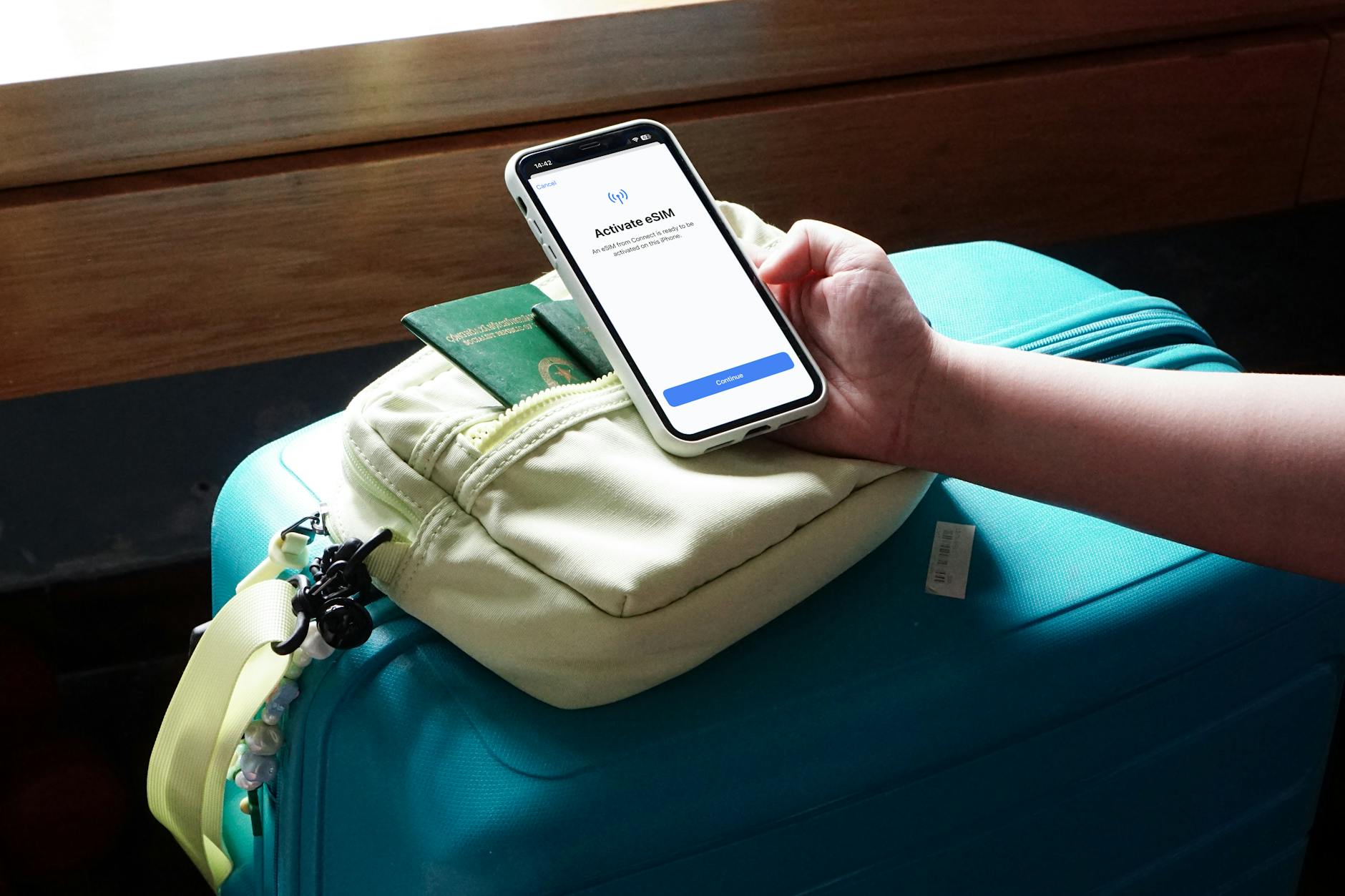
What is an eSIM? A Complete Beginner's Guide for Travelers
If you're planning an international trip, you've probably heard about eSIMs as a way to stay connected without paying exorbitant roaming fees. But what exactly is an eSIM, and how does it work for travelers? In this comprehensive guide, we'll demystify this technology, explain why it's revolutionizing travel connectivity, and show you exactly how to use it on your next adventure.
An eSIM (embedded SIM) is a digital SIM card that's built directly into your device. Unlike traditional physical SIM cards that you need to insert and remove, an eSIM can be programmed remotely with different carrier profiles. For travelers, this means you can purchase and activate a local data plan for your destination without ever visiting a store or handling a tiny plastic chip. It's like having multiple SIM cards in one device, ready to switch between with just a few taps.
Understanding eSIM Technology: The Basics
At its core, an eSIM performs the same function as a traditional SIM card—it identifies you to mobile networks and allows you to connect. The key difference is how it's implemented. Instead of being a removable plastic card, an eSIM is a small chip soldered onto your device's motherboard. This chip can be reprogrammed with different carrier information through software.
When you purchase an eSIM plan from providers like Saily, you receive a QR code or activation code. Scanning this code or entering it in your device settings downloads the carrier profile to your eSIM chip. This process typically takes just a few minutes, and you can store multiple profiles on a single eSIM, switching between them as needed.
How eSIMs Differ from Physical SIMs
Traditional physical SIM cards require you to:
- Purchase a SIM at your destination
- Remove your existing SIM
- Insert the new SIM
- Configure APN settings manually
- Potentially cut the SIM to fit your device
With eSIMs, the process is streamlined:
- Purchase online before or during travel
- Scan a QR code
- Follow on-screen prompts
- Start using data immediately
This digital approach eliminates the hassle of finding SIM cards abroad, dealing with language barriers at local shops, and the risk of losing tiny SIM cards during your travels.
Why Travelers Love eSIMs: Key Benefits
eSIM technology offers several compelling advantages for international travelers that go beyond mere convenience.
Cost Savings and Roaming Avoidance
The most immediate benefit for travelers is financial. Traditional international roaming can cost $10-15 per day or more, adding hundreds of dollars to your trip expenses. With eSIMs from providers like Saily, you can access local rates in your destination country, often for just a few dollars per day or through affordable data packages.
Consider this comparison for a 10-day trip to Europe:
| Connection Method | Estimated Cost | Setup Time | Flexibility |
|---|---|---|---|
| Traditional Roaming | $100-150 | Instant | Low (locked to home carrier) |
| Local Physical SIM | $20-40 | 1-2 hours | Medium (single country) |
| Multi-country eSIM | $30-50 | 5 minutes | High (multiple countries) |
Convenience and Flexibility
eSIMs eliminate the physical limitations of traditional SIM cards. You don't need to:
- Hunt for SIM card vendors upon arrival
- Worry about SIM card sizes (nano, micro, standard)
- Carry SIM ejector tools
- Risk damaging your device's SIM tray
Instead, you can purchase and activate your eSIM before you even board your flight. Many travelers complete the setup while waiting at their departure gate, ensuring they have connectivity the moment they land.
Multiple Profiles and Easy Switching
One of the most powerful features for frequent travelers is the ability to store multiple carrier profiles on a single eSIM. You might have:
- Your primary home carrier profile
- A regional European data plan
- A separate Asian data plan
- A backup global plan for emergencies
Switching between these profiles takes seconds, making it ideal for multi-destination trips or travelers who frequently cross borders.
Devices That Support eSIM
Not all devices support eSIM technology yet, but adoption is growing rapidly. Here's what you need to know about device compatibility.
Smartphones with eSIM Support
Most newer smartphones from major manufacturers include eSIM capabilities:
Apple iPhones:
- iPhone XR, XS, and newer models
- iPhone SE (2nd and 3rd generation)
- All iPhone 11, 12, 13, 14, and 15 models
Samsung Galaxy:
- Galaxy S20 and newer S-series models
- Galaxy Z Fold and Z Flip series
- Galaxy Note 20 Ultra
Google Pixel:
- Pixel 3 and newer models
- Pixel Fold
Other Brands:
- Motorola Razr (2019 and newer)
- Huawei P40 and newer
- Various models from Oppo, Xiaomi, and Sony
Tablets and Other Devices
eSIM technology isn't limited to smartphones. Many tablets, laptops, and wearable devices also support eSIM:
- iPad Pro (3rd generation and newer)
- iPad Air (3rd generation and newer)
- iPad (7th generation and newer)
- iPad mini (5th generation and newer)
- Microsoft Surface Pro X
- Samsung Galaxy Tab S series
- Apple Watch Series 3 and newer (cellular models)
Checking Your Device Compatibility
To verify if your device supports eSIM:
- Check your device specifications on the manufacturer's website
- Look in your device settings for "Cellular" or "Mobile Data" options
- Search for "Add Cellular Plan" or similar terminology
- Consult with your device manufacturer or carrier
If you're unsure about your specific model, our eSIM compatibility guide provides detailed information for hundreds of devices.
How to Set Up an eSIM: Step-by-Step Guide
Setting up an eSIM is straightforward, but the exact steps vary slightly between devices. Here's a comprehensive guide to get you started.
Before You Travel: Preparation Steps
- Check compatibility: Ensure your device supports eSIM and is unlocked from your home carrier.
- Purchase your plan: Choose a data plan from a provider like Saily that covers your destination(s).
- Receive activation details: You'll get a QR code or activation code via email.
- Wait for activation: Some providers recommend waiting until you arrive at your destination to activate, while others allow pre-activation.
Activation Process for iOS Devices
For iPhone users, the setup process typically involves:
- Go to Settings > Cellular
- Tap "Add Cellular Plan"
- Scan the QR code provided by your eSIM provider
- Follow the on-screen prompts to label and configure the plan
- Enable the plan and select data options
You can choose how to use your eSIM—as your primary line, for data only, or for specific purposes like business travel.
Activation Process for Android Devices
Android setup varies by manufacturer, but generally follows this pattern:
- Go to Settings > Connections > SIM card manager
- Select "Add mobile plan"
- Choose "Scan carrier QR code"
- Scan your eSIM QR code
- Configure settings and enable the plan
Some Android devices may use different terminology, such as "Network & Internet" instead of "Connections."
Troubleshooting Common Setup Issues
If you encounter problems during setup:
- QR code won't scan: Ensure good lighting and try manually entering the activation code if provided
- Plan won't activate: Check that you have a stable internet connection (Wi-Fi recommended)
- No service after activation: Verify that you've selected the correct APN settings if required
- Device says eSIM not supported: Double-check your device model and carrier unlock status
For more detailed troubleshooting, our eSIM setup guide covers dozens of specific scenarios and solutions.
Choosing the Right eSIM Plan for Your Travel Needs
With numerous eSIM providers available, selecting the right plan requires considering several factors specific to your travel patterns.
Data Requirements by Travel Type
Your data needs will vary significantly based on how you travel:
Light Users (Social media, messaging, maps): 1-2GB per week Moderate Users (Email, light browsing, occasional video): 3-5GB per week Heavy Users (Streaming, video calls, frequent uploads): 7-10GB+ per week Business Travelers: Consider plans with higher data caps and reliable speeds for video conferencing
Regional vs. Global Plans
eSIM providers typically offer two main types of plans:
Regional Plans: Cover specific areas like Europe, Asia, or North America. These usually offer better value if you're staying within one region.
Global Plans: Provide coverage in multiple regions or worldwide. Ideal for multi-destination trips or unpredictable travel schedules.
Plan Duration and Flexibility
Consider how long you'll need connectivity:
- Short-term: 3-7 day plans for brief trips
- Medium-term: 10-30 day plans for extended travel
- Long-term: Monthly plans for digital nomads or extended stays
Many providers, including Saily, offer the flexibility to extend or top up your data if you need more than originally planned.
Speed and Network Quality
Not all eSIM plans offer the same network performance. Factors to consider:
- Network partners: Which local carriers does the eSIM provider partner with?
- Speed caps: Some plans throttle speeds after certain usage
- Priority data: Whether you get the same priority as local subscribers
Our eSIM plan comparison guide provides detailed analysis of different providers and plan types.
eSIM Security: What Travelers Need to Know
Security is a legitimate concern when using new technology, especially while traveling. Here's what you should understand about eSIM security.
Built-in Security Features
eSIM technology includes several security advantages over physical SIMs:
Remote Management: If your device is lost or stolen, you can remotely disable the eSIM profile without needing physical access to the SIM card.
Reduced SIM Swapping Risk: eSIM profiles are tied to your device and account, making it harder for malicious actors to transfer your number to another device.
Encrypted Profiles: eSIM carrier profiles are digitally signed and encrypted, preventing unauthorized modifications.
Privacy Considerations
When using eSIMs while traveling:
- Your data usage is typically routed through local networks
- Reputable providers have privacy policies protecting your information
- You maintain control over which profiles are active on your device
Best Practices for Secure eSIM Use
- Purchase from reputable providers: Choose established companies with transparent policies
- Use secure connections: Activate your eSIM over trusted Wi-Fi networks when possible
- Keep software updated: Ensure your device has the latest security patches
- Enable device security: Use passcodes, biometric authentication, and remote tracking features
- Monitor data usage: Regularly check your data consumption for unexpected activity
Saily incorporates multiple security layers, including encrypted connections and secure profile delivery, to protect our travelers' data and privacy.
Real-World Travel Scenarios: eSIMs in Action
Understanding how eSIMs work in practice can help you visualize their benefits. Let's explore some common travel scenarios.
Scenario 1: Two-Week European Tour
Traveler: Sarah, a tourist visiting France, Italy, and Germany Challenge: Needs continuous connectivity across three countries without changing SIMs eSIM Solution: Sarah purchases a 15-day European regional eSIM from Saily with 10GB of data Implementation: She activates the eSIM before leaving the US, and it automatically connects to local networks in each country Result: Sarah has reliable maps, translation apps, and social media access throughout her trip for about $35 total
Scenario 2: Business Trip with Multiple Stops
Traveler: Michael, a consultant visiting Singapore, Hong Kong, and Tokyo in one week Challenge: Needs high-speed data for video calls and large file transfers eSIM Solution: Michael selects a global eSIM plan with premium speeds and 15GB of data Implementation: He keeps his primary US number active for calls while using the eSIM exclusively for data Result: Michael maintains productivity across all locations without worrying about connectivity issues
Scenario 3: Digital Nomad Lifestyle
Traveler: Elena, working remotely while traveling through Southeast Asia for three months Challenge: Needs flexible, affordable data across multiple countries with varying lengths of stay eSIM Solution: Elena uses a combination of regional Asian plans and top-ups as needed Implementation: She switches between profiles based on her current location and data needs Result: Elena stays connected for work and personal use while optimizing costs for her extended travel
Comparing eSIM Providers: What to Look For
With several eSIM providers in the market, understanding their differences helps you make an informed choice.
Key Provider Comparison
| Feature | Saily | Airalo | Holafly | Nomad |
|---|---|---|---|---|
| Multi-country plans | Yes | Yes | Yes | Yes |
| 24/7 Support | Live chat | Email/ticket | Limited hours | Email only |
| Data rollover | Available | No | No | No |
| Automatic activation | Yes | Manual | Manual | Manual |
| Security features | Advanced | Basic | Basic | Basic |
| Price competitiveness | High | Medium | Medium | High |
Important Evaluation Criteria
When comparing eSIM providers, consider:
Coverage: Which countries and regions are included in their plans? Network quality: Do they partner with reliable local carriers? Customer support: What support options are available, especially in different time zones? Ease of use: How intuitive is their activation and management process? Additional features: Do they offer data notifications, usage tracking, or other helpful tools? Pricing transparency: Are there hidden fees or unexpected charges?
Saily distinguishes itself through comprehensive 24/7 live chat support, automatic activation features, and security benefits specifically designed for travelers.
Common eSIM Myths and Misconceptions
As with any emerging technology, several myths surround eSIMs. Let's separate fact from fiction.
Myth 1: eSIMs Are Less Secure Than Physical SIMs
Reality: eSIMs offer enhanced security features, including remote management and encrypted profiles. The digital nature actually makes certain types of fraud more difficult.
Myth 2: eSIMs Drain Battery Faster
Reality: Modern eSIM implementation has minimal impact on battery life. Any difference from physical SIMs is negligible for most users.
Myth 3: You Can't Use eSIM and Physical SIM Simultaneously
Reality: Most eSIM-capable devices support Dual SIM functionality, allowing you to use both an eSIM and physical SIM at the same time. This is perfect for keeping your home number active while using local data.
Myth 4: eSIMs Are Only for New, Expensive Devices
Reality: While earlier adoption focused on premium devices, eSIM support now extends to mid-range smartphones and has been available on iPhones since 2018.
Myth 5: Setting Up an eSIM Is Complicated
Reality: The setup process is typically simpler than finding and installing a physical SIM abroad, especially with providers like Saily that offer automatic activation and clear instructions.
The Future of eSIM Technology for Travelers
eSIM adoption is accelerating, with significant implications for how travelers stay connected.
Industry Trends and Predictions
Increased Device Support: More manufacturers are including eSIM capabilities in their devices, with some rumors suggesting future iPhones might be eSIM-only in certain markets.
Carrier Adoption: Traditional mobile carriers are increasingly offering eSIM options, though traveler-focused providers like Saily often provide better value for international use.
Integration with Travel Services: Expect to see eSIM offerings integrated with airline, hotel, and travel booking platforms for seamless connectivity as part of travel packages.
Emerging Use Cases
Beyond basic data connectivity, eSIM technology enables:
Instant Local Numbers: Some providers offer local phone numbers with their eSIM plans, useful for making local calls or receiving verification codes.
IoT Connectivity: eSIMs make it easier to connect tablets, laptops, and other devices while traveling without needing separate physical SIMs.
Flexible Work Arrangements: As remote work becomes more common, eSIMs support the "work from anywhere" lifestyle with reliable connectivity across borders.
What This Means for Travelers
The continued evolution of eSIM technology means travelers can expect:
- Even simpler activation processes
- More competitive pricing as adoption increases
- Better integration with travel apps and services
- Enhanced features like intelligent network switching
Getting Started with Your First eSIM
Ready to try an eSIM for your next trip? Here's a practical action plan.
Step 1: Verify Your Device
Check that your smartphone, tablet, or other device supports eSIM and is unlocked from your home carrier. Our device compatibility checker can help with this verification.
Step 2: Choose Your Provider and Plan
Consider your destination(s), trip duration, and data needs. For most travelers, a provider like Saily that offers multi-country plans, 24/7 support, and straightforward pricing provides the best balance of value and reliability.
Step 3: Purchase and Prepare
Buy your plan before you travel to ensure everything is ready. You'll receive activation details via email—save these somewhere accessible, like a cloud storage service or printed copy.
Step 4: Activate at the Right Time
Follow your provider's recommendations for when to activate. Some plans work immediately worldwide, while others are optimized for activation upon arrival at your destination.
Step 5: Test and Troubleshoot
Once activated, test your connection with a few basic tasks like loading a webpage or sending a message. If you encounter issues, contact customer support immediately—reputable providers like Saily offer 24/7 assistance.
Conclusion: Embracing the eSIM Revolution for Stress-Free Travel
eSIM technology represents a significant advancement in how travelers stay connected abroad. By eliminating the physical limitations of traditional SIM cards and offering digital convenience, eSIMs provide a superior solution for international connectivity.
For the modern traveler, whether you're on a short vacation, extended business trip, or digital nomad journey, eSIMs offer:
- Substantial cost savings compared to traditional roaming
- Unmatched convenience with digital activation and management
- Enhanced flexibility through multiple profile support
- Improved security with remote management capabilities
- Peace of mind knowing you'll stay connected throughout your travels
As adoption continues to grow and technology evolves, eSIMs are poised to become the standard for international travel connectivity. By understanding how they work and choosing the right provider for your needs, you can enjoy seamless internet access wherever your travels take you.
Ready to experience the benefits for yourself? Explore Saily's eSIM plans for travelers and discover how easy staying connected abroad can be.